
Giving a voice to individuals with apraxia of speech
Understanding PPAOS
What is Primary Progressive Apraxia of Speech?
Primary Progressive Apraxia of Speech (PPAOS) is a progressive neurological motor speech disorder. It affects the brain's ability to plan and programme the movements needed to produce speech.
Unlike acquired apraxia of speech following a stroke or brain injury, PPAOS usually begins gradually. Early changes may be subtle but become more noticeable over time.
A person may know exactly what they want to say and understand language normally but have increasing difficulty coordinating the precise movements needed to say the words.
PPAOS is different from Primary Progressive Aphasia (PPA). PPA primarily affects language, whereas PPAOS primarily affects the motor planning and programming of speech.

What Causes PPAOS?
PPAOS results from progressive neurodegeneration affecting areas of the brain involved in speech motor planning and programming.
Research has particularly identified changes involving premotor areas and the supplementary motor area.
PPAOS is strongly associated with neurodegenerative diseases involving abnormal tau protein, particularly 4-repeat tauopathies. Pathological diagnoses associated with progressive apraxia of speech include:
- Progressive supranuclear palsy (PSP)
- Corticobasal degeneration (CBD)
- Other forms of frontotemporal lobar degeneration
The underlying neurological disease cannot necessarily be determined when speech symptoms first appear. Additional neurological features may emerge as the condition progresses

How Does PPAOS Begin?
The onset is usually gradual.
A person or their family may initially notice that:
- Speech is becoming slower.
- Particular words are increasingly difficult to pronounce.
- Longer words or sentences are harder than shorter ones.
- Speech sounds less fluent or natural.
- Sounds are occasionally distorted.
- The person hesitates or makes repeated attempts to produce a word.
- Speech requires noticeably more effort.
- The rhythm or stress of speech has changed.
Because language and other cognitive abilities can initially remain relatively preserved, the speech problem may be the person's only obvious neurological symptom.
You wouldn't believe the amount of people that confuse aphasia with apraxia, neurologists, other health care workers and researchers
John Corvino presenting on his PPAOS


Speech Characteristics of PPAOS
There is no single speech characteristic that occurs in everyone with PPAOS. Diagnosis depends on identifying a pattern of motor speech features.
Common characteristics include:
Slow speech rate
Speech may become noticeably slower and increasingly effortful.
Syllable segmentation
Natural transitions between syllables can be disrupted, making speech sound broken up or segmented.
Distorted speech sounds
Sounds may be produced inaccurately rather than simply replaced with another clearly produced speech sound.
Distorted substitutions
A production may resemble another speech sound but remain noticeably distorted.
Increased difficulty with complexity
Errors may become more noticeable with longer words, unfamiliar words or increasingly complex sentences.
Abnormal prosody
Stress, rhythm, timing and intonation may become disrupted.
Articulatory groping
The person may visibly search for the correct position of the lips, tongue or jaw.
False starts and repeated attempts
Several attempts may be required before a word is successfully produced.
Effortful speech
Speech can require considerable concentration even though the person knows what they want to say.

Phonetic and Prosodic PPAOS
Research has identified different patterns of PPAOS. These are generally described as phonetic and prosodic presentations, although many people show characteristics of both.
Phonetic PPAOS
The predominant difficulty involves the accurate production of individual speech sounds.
Features may include:
- Distorted speech sounds
- Distorted sound substitutions
- Sound additions
- Articulatory groping
- Repeated attempts to achieve the correct articulation
Prosodic PPAOS
The predominant difficulty involves the timing and rhythm of speech.
Features may include:
- Slow speech
- Segmentation between syllables
- Lengthened speech sounds or syllables
- Abnormal stress
- Disrupted rhythm
- Speech that may sound mechanical or unnatural
These are not completely separate disorders. An individual can have characteristics of both, and the pattern can change as the condition progresses.
Primary Progessive Apraxia of speech
What is it?
Primary progressive apraxia of speech is a neurodegenerative motor speech disorder characterized by a gradual loss of the ability to plan and sequence speech movements.
Overview
PPAOS is a progressive motor speech disorder in which the brain gradually loses the ability to plan and program the movements required for speech. Unlike stroke-related apraxia, which occurs suddenly, PPAOS develops slowly, initially causing subtle speech difficulties that worsen over time. Individuals often know the words they want to say but struggle to articulate them correctly, resulting in distorted or halting speech aphasia.org+2.
Causes and Pathology
PPAOS is most commonly associated with frontotemporal degeneration (FTD), particularly 4-repeat tauopathies such as corticobasal degeneration (CBD) and progressive supranuclear palsy (PSP). These conditions lead to atrophy in brain regions responsible for planning speech movements, primarily in the left hemisphere. Unlike Alzheimer’s disease, memory and spatial skills are typically preserved in the early stages
Primary Progressive Apraxia of Speech (PPAOS) - National Aphasia Association
Delayed Progressive Apraxia of Speech:A Distinct Clinical Subtype
What you might be asked in a healthcare visit for later developing speech apraxia
When did the symptoms of the speech issues begin?
Is speech harder to understand at certain times, such as when you are tired or stressed or speaking quickly?
Do you understand what others say to you?
Do others understand what you're saying?
Have you noticed changes in your speech, such as the way you move your jaw, tongue and lips to make speech sounds, or changes in the sound of your voice?
Is it hard to plan or coordinate mouth movements for speech?
Have there been changes in writing, typing or non-speech movements?
(taken from the Mayo Clinic website)

How common is it?
More commonly diagnosed in people aged 50–70. No study has yet looked into its prevalence. However, it can be estimated at 4.4 per 100,000 (Botha, H., & Josephs, K. A., 2019).
Studies suggest that PPAOS may account for about 20–30% of cases initially diagnosed as primary progressive aphasia (PPA) when speech motor impairments are the dominant symptom.
Due to overlap with other neurodegenerative diseases, the condition is often underdiagnosed or misdiagnosed in early stages.
Primary Progressive Aphasia and Apraxia of Speech - PMC
Primary progressive apraxia of speech: from recognition to diagnosis and care
Research
Chance to get involved in key research into PPAOS
https://www.mayo.edu/research/clinical-trials/cls-20342653
What are the symtoms
Primary Progressive Apraxia of Speech (PPAOS) can present in different ways, each affecting how your speech sounds.
Prosodic AOS
- Speech is slow and uneven.
- Words or syllables may be stretched or broken apart
- The rhythm can sound unnatural or robotic.
Phonetic AOS
- Speech sounds may be unclear or slightly distorted.
- You might visibly work to find the right mouth position for certain sounds.
Most people with PPAOS experience Prosodic AOS as their main difficulty, but Phonetic AOS can also be present. Many have a combination of both patterns.
Chris Kamara's Experience
Chris Kamara says he "suffered in silence" with speech problems for almost two years before he was diagnosed with a thyroid problem. ttps://www.itv.com/news/calendar/2022-12-13/kamara-suffering-with-balance-issues-and-weakness-due-to-thyroid-issue
Speaking to ITV News ahead of a documentary about his condition, Kamara – known to millions by his nickname "Kammy" said he wanted his experience to be a warning to other people.
He said: "Initially I was in denial. I'm a dinosaur. I suffered in silence for about 20 months and in that time my thyroid gland became virtually non-existent , so that could be the reason for all my problems along the line, by just not going to see a doctor.
"Now not only have I got an underactive thyroid, the apraxia of speech has come on, my balance is no good, I'm really weak."
Chris is a former Leeds United, Sheffield United, and Bradford City player, from Middlesbrough,. (ITVX, 2025) Chris Kamara: Lost for Words - ITVX
Resources
Educational resources for support with diagnosis from Rare Dementia Support (UK Based)
Together we learn – Rare Dementia Support .
Association for Frontotemporal Degeneration
USA based-Call 866-507-7222 or send an email to info@theaftd.org for answers to your Frontemporal dementia questions
Diagnostic checklist- FTD-ALS
FTD-ALS - English - Diagnostic Checklist
Diagnostic checklist Primary Progressive Aphasia (PPA)
Diagnostic checklist Behavioral Variant Frontotemporal Degeneration (bvFTD)
Diagnostic Checklist- Progressive Supranuclear Palsy (PSP)
PSP - English - Diagnostic Checklist
Primary Progressive Apraxia of Speech MC194832 Mayo Clinic Information Booklet
Primary Progressive Apraxia of Speech?- A useful resource to print from the https://www.brain.northwestern.edu/docs/Mesulam-Center---PPA-Card.pdf
Do you want to help research PSP? If so you can join this register. Our work in congenital conditions and rare diseases - NDRS
Groups/support organisations
National Aphasia Association
https://aphasia.org/series/ppa-chat-2/
This US organisatgion runs a support group where individuals are invited to learn, share strategies, and connect with each other.
When: The second and fourth Friday of each month, 2:30-3:30 pm Eastern Time | 1:30 pm Central Time | 12:30 pm Mountain Time | 11:30 am Pacific Time
More Information: This program is for people with PPA / PPAOS and their communication partners. We start as a full group, sometimes with a short presentation. Then, we split into breakout rooms based on PPA / PPAOS type or symptoms, so you can learn and connect with others in a similar situation. There’s also a breakout room for communication partners. Communication partners are welcome to assist during the chat, like using supports
UW Department of Speech and Hearing Science
Do you or a loved one live with PPA/PPAOS? Come explore a group just for you! We meet monthly, on Wednesday afternoons. A free event.
Offered in partnership by UW Department of Speech and Hearing Sciences, UW Memory and Brain Wellness Center, UW Alzheimer's Disease Research Center.
https://thememoryhub.org/page/ppa-together
Diagnosis
Primary Progressive Apraxia of Speech (PPAOS) is characterized by a gradual decline in motor speech planning and programming, leading to a range of speech impairments.
FDG-PET is particularly sensitive in detecting early hypometabolism in premotor regions. MRI may show atrophy later. Advanced imaging helps refine diagnosis.
Possible genetic link
A positive family history for neurodegenerative disease is found in 25% of patients diagnosed with PPAOS (Duffy, J. R., Utianski, R. L., & Josephs, K. A., 2020)
https://www.sciencedaily.com/rel.../2025/11/251101000713.htm
Symptoms of Primary Progressive Apraxia
Speech Rate and Segmentation
Sound Errors and Utterance Complexity
Sound Errors and Utterance Complexity

Individuals with PPAOS often exhibit a slow speech rate and lengthened intersegment durations, with syllable segmentation occurring both within multisyllabic words and across phrases.
People with PPAOS tend to speak slowly, with noticeable pauses between syllables and words. This segmentation affects both long words and phrases, making their speech sound choppy or disjointed.
Sound Errors and Utterance Complexity
Sound Errors and Utterance Complexity
Sound Errors and Utterance Complexity
Sound distortions, distorted substitutions, and additions become more prominent with increasing utterance complexity or length.
As sentences become longer or more complex, speech errors increase. These may include slurred or imprecise sounds, incorrect substitutions, or adding extra sounds. This reflects the growing difficulty the brain has with organizing motor plans for complex speech.
Struggle Behaviours
Sound Errors and Utterance Complexity
Speech Motor Tasks (SMRs vs AMRs)
Articulatory groping, false starts, and audible or visible effort are common, reflecting the struggle to initiate or sequence movements.
Visible signs of struggle, like repeated attempts to form words (groping), hesitations, and exaggerated effort indicate the person's difficulty in starting or sequencing the precise motor movements needed for speech.
Speech Motor Tasks (SMRs vs AMRs)
Speech Motor Tasks (SMRs vs AMRs)
Speech motor tasks such as Sequential Motion Rates (SMRs) are typically deliberate, slow, and segmented, with distorted productions compared to Alternating Motion Rates (AMRs), which also often show inaccuracy in place or manner.
When asked to repeat sequences like “pa-ta-ka” (SMR), individuals perform slowly and with errors, showing how hard it is to shift between movements. Even simpler tasks like repeating “pa-pa-pa” (AMR) show mistakes, though typically less complex than SMRs. Both reveal underlying motor planning deficits
Can Dysarthria Develop in Primary Progressive Apraxia of Speech?

Although dysarthria is uncommon in the early stages, it may develop as the condition progresses.
Research suggests that fewer than 30% of individuals initially present with dysarthria. However, its prevalence increases over time.
Unlike apraxia of speech, which affects speech motor planning and programming, dysarthria involves difficulties with the neuromuscular execution of speech.
Recognising the emergence of dysarthria is important because it can introduce additional communication difficulties and influence how speech is assessed and supported.
Swallowing difficulties in PPAOS

Swallowing difficulties, known as dysphagia, may also emerge after dysarthria develops.
Regular speech and language therapy reviews can help identify changing communication needs and potential swallowing concerns.
PPAOS Diagnosis and Assessment Resources
Primary Progressive Apraxia of Speech – Diagnosis and Treatment | Mayo Clinic

Explains the diagnostic process, including medical history, neurological examination, speech and language assessment, neuropsychological testing and brain imaging.
Review of diagnosis and assessment

Primary Progressive Apraxia of Speech: From Recognition to Diagnosis and Care – Duffy, Utianski & Josephs
A detailed professional review covering recognition, diagnosis, differential diagnosis, clinical features, progression, imaging and pathology.
Apraxia of Speech Rating Scale (ASRS)
A structured clinical rating scale for identifying and quantifying characteristics of apraxia of speech. Particularly relevant to progressive AOS and useful for documenting change over time.
Motor Speech and language Differential Assessment in PPAOS

Assessment should include conversation, picture description, oral reading, repetition, increasingly complex words and sentences, sustained vowels, alternating motion rates and sequential motion rates.
Western Aphasia Battery–Revised (WAB-R)
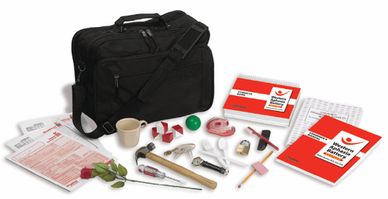
Frequently used in PPAOS research to investigate whether aphasia accompanies the motor speech disorder. It assesses spontaneous language, auditory comprehension, repetition and naming.
Frequently used in PPAOS research to investigate whether aphasia accompanies the motor speech disorder. It assesses spontaneous language, auditory comprehension, repetition and naming.
Assessment for Dysarthria

PPAOS needs to be differentiated from dysarthria, although dysarthria may develop later. Assessment should consider articulation, voice, resonance, respiratory support, rate and prosody.
Oral speech assessment

Assessment of voluntary non-speech oral movements may provide additional diagnostic information. Tasks can include coughing, tongue clicking, blowing and lip movements on command and imitation.
Meade, G., Pham, N. T. T., Clark, H. M., Duffy, J. R., Whitwell, J. L., Josephs, K. A., & Utianski, R. L. (2024). Progression of motor speech function in speakers with primary progressive apraxia of speech. Journal of Speech, Language, and Hearing Research, 67(12), 4651-4662.
Neuropsychological Assessment

Assessment of memory, executive functioning, visuospatial skills, reasoning and language can help establish the wider cognitive profile and assist differential diagnosis.
MRI and PET imaging may identify abnormalities in brain regions involved in speech motor planning. I
MRI and PET imaging may identify abnormalities in brain regions involved in speech motor planning. I
PET imaging may identify abnormalities in brain regions involved in speech motor planning. Imaging supports the clinical assessment but does not diagnose PPAOS independently.
Neurological and Movement Assessment
MRI and PET imaging may identify abnormalities in brain regions involved in speech motor planning. I

Assessment should consider gait, balance, eye movements, rigidity, bradykinesia, limb movements and other neurological signs. Some people with PPAOS later develop features associated with PSP or corticobasal syndrome.
PPAOS versus Primary Progressive Aphasia – Acoustic Measures
PPAOS versus Primary Progressive Aphasia – Acoustic Measures

Provides research evidence showing how temporal speech measures can distinguish PPAOS from agrammatic and logopenic variants of PPA.