
Giving a voice to individuals with apraxia of speech

Speech, Phonological Awareness, Reading and Spelling
Reading, Literacy and Childhood Apraxia of Speech
Children with Childhood Apraxia of Speech (CAS) may be at increased risk of difficulties with reading, phonics, spelling and written language, although literacy difficulties do not affect every child with CAS. Developing literacy requires children to connect the sounds of spoken language with letters and written words,
Reading, literacy and CAS
Literacy development and Childhood Apraxia of Speech

Children with Childhood Apraxia of Speech are at increased risk of literacy difficulties, although not every child with CAS will experience problems with reading or spelling. Literacy progress should therefore be monitored alongside speech and language development.
Why CAS Can Affect Literacy

Reading and spelling require children to connect spoken sounds with written symbols. Difficulties processing, organising or manipulating speech-sound information can make these relationships harder to establish for some children with CAS.
Literacy Risk Is Not the Same for Every Child
Speech Progress Does Not Guarantee Literacy Progress
Speech Progress Does Not Guarantee Literacy Progress
CAS should be viewed as a risk factor rather than a prediction of literacy difficulty. Some children develop age-appropriate literacy skills, while others need additional or specialist support.
Speech Progress Does Not Guarantee Literacy Progress
Speech Progress Does Not Guarantee Literacy Progress
Speech Progress Does Not Guarantee Literacy Progress
Improvement in speech production does not automatically mean that phonological awareness, reading and spelling will develop at the same rate. These areas should be monitored separately when necessary.
Assessing Literacy in Children with CAS
What Should Be Assessed?
Assess Blending and Segmentation Separately

Assessment may include phonological awareness, grapheme-phoneme knowledge, decoding, spelling, reading fluency, comprehension, vocabulary, language and phonological memor
Assess Blending and Segmentation Separately
Assess Blending and Segmentation Separately

Blending and segmentation are closely related but different skills. A child may be able to blend sounds to read a word while still experiencing difficulty breaking a word apart for spelling.
Include Language Assessment

Reading difficulties should not automatically be assumed to arise solely from phonological skills. Receptive and expressive language, vocabulary, narrative and grammar should also be considered.
Be Careful With Spoken Responses

Children with CAS may know the correct answer but be unable to produce the required word or sound accurately. Spoken assessment responses therefore need careful interpretation so that a speech-production error is not mistaken for lack of phonological or literacy knowledge.
Dynamic Assessment

Dynamic assessment can examine how a child learns when additional teaching, modelling or prompting is provided. This may give useful information beyond a simple correct-or-incorrect score.
Do Not Delay Assessment

Where literacy difficulties are suspected, assessment does not need to wait until a lengthy period of intervention has been completed. Assessment and appropriate support can occur alongside one another.
Phonological Awareness
What is Phonological Awareness
What is Phonological Awareness
What is Phonological Awareness
Phonological awareness is the ability to recognise and work with the sound structure of spoken language. It includes awareness of words, syllables, rhyme and individual speech sounds. .
Phonemic awareness
What is Phonological Awareness
What is Phonological Awareness

Phonemic awareness focuses specifically on individual phonemes. Important skills include identifying beginning and final sounds, blending sounds, segmenting words and manipulating or deleting sounds.
Why It Matters in CAS
The Alphabetic Principle
The Alphabetic Principle
Research has found poorer phonological-awareness performance in groups of children with CAS compared with typically developing children. These skills are important foundations for both reading and spelling.
The Alphabetic Principle
The Alphabetic Principle
The Alphabetic Principle
The alphabetic principle is the understanding that phonemes in spoken language are represented by letters and groups of letters, known as graphemes.
Children need to learn more than letter names. They need to understand how the speech-sound system connects with written language.
Recognising Literacy Difficulties
Early Warning Signs
Signs that may require closer monitoring include difficulty learning sound-letter correspondences, blending or segmenting sounds, recognising spelling patterns, decoding unfamiliar words or learning familiar printed words.

Reading Fluency and Comprehension
Some children may decode individual words but read connected text slowly or inaccurately. Others may experience difficulties understanding what they have read, particularly where language difficulties are also present.

Wider Language Difficulties
Vocabulary, morphology, grammar, narrative and word-finding difficulties can create additional barriers to reading comprehension and written language.
Look for Patterns Over Time
A single difficulty does not necessarily indicate a literacy disorder. Greater concern is warranted where difficulties occur across several areas, persist over time or continue despite appropriate teaching.
Phonics and CAS
What Is Phonics?

Phonics teaches the relationship between the sounds of spoken language and the letters or letter combinations used to represent them.
Explicit Teaching

Children with CAS who experience literacy difficulties may benefit from particularly clear teaching of individual sound-letter relationships rather than being expected to infer them independently.
Systematic Teaching

New correspondences should be introduced in an organised sequence, while previously taught correspondences are regularly reviewed and practised.
Connect Sounds With Their Written Forms

Where useful, teaching can draw attention to the sound itself, how it is produced and which grapheme or graphemes represent it
Generalisation Is Important
No Single CAS Phonics Programme

Knowing a sound-letter relationship in a familiar exercise does not necessarily mean that the child can use it independently. Check whether knowledge transfers to unfamiliar words and new contexts.
No Single CAS Phonics Programme
No Single CAS Phonics Programme

Current CAS research does not establish one phonics programme as being superior for children with CAS. If progress remains limited, the child's broader phonological, speech and language profile should be reconsidered rather than simply increasing the quantity of the same teaching.
Speech-to-Print and Sound Walls

What Is a Speech-to-Print Approach?
A speech-to-print approach starts with the sounds children hear and produce and explicitly connects them with the letters and letter combinations used to represent them.

Connecting Speech Sounds to Print
. Teaching can follow a clear sequence: speech sound → how it is produced → how it sounds → where it occurs in words → grapheme(s) → reading and spelling. This makes the relationship between spoken and written language explicit.

Why Speech-to-Print May Help Children with CAS
This approach may be particularly relevant when a child has difficulties with both speech production and phonological awareness. It allows speech-sound knowledge and literacy skills to be developed together rather than treated as completely separate areas. .

What Is a Sound Wall?
A sound wall organises information according to speech sounds rather than alphabetically. It can show how and where a sound is produced, lip and tongue position, whether the voice is on or off, and the phoneme associated with the movement.
Sound walls should be built gradually and previously introduced sounds revisited regularly. For children with CAS they may provide useful visual support for literacy learning, but they are a teaching resource rather than a treatment for CAS.

Connecting Speech Sounds and Written Language
As sounds are taught, the corresponding graphemes can be added to the wall. Mouth photographs, diagrams and mirrors can help children connect articulation → phoneme → grapheme, reinforcing links between speech, phonemic awareness and literacy.
Spelling and writing

Supporting Spelling
Developing Written Language
Developing Written Language
Spelling requires children to identify and sequence the sounds within words and connect them with appropriate graphemes. Support may include explicit segmentation, phoneme-grapheme links, common spelling patterns and frequent opportunities to apply these skills.
Developing Written Language
Developing Written Language
Developing Written Language
Support should extend beyond individual words where necessary. Children may need explicit teaching of morphology, including prefixes, suffixes and word families, as well as vocabulary, sentence construction, grammar and organisation of written ideas
Phonological awareness, memory and retrieval assessments
Phonological Awareness and Literacy Development in Children with Expressive Phonological Impairments
Bird, Bishop & Freeman (1995)
https://figshare.com/articles/journal_contribution/Phonological_awareness_and_literacy_development_in_children_with_expressive_phonological_impairments/1271544?file=3255038
This research paper examines phonological awareness and literacy development in children with speech difficulties. The appendix contains an assessment word list that can be used as a free resource for exploring relevant literacy and phonological-awareness skills.
Gillon’s Phonological Awareness Assessment Probes
Criterion-referenced assessment probes developed through Professor Gail Gillon’s work to examine skills including rhyme, phoneme isolation, blending, deletion and segmentation. They can help professionals assess phonological-awareness skills and monitor progress during intervention.
Syllable Repetition Task (SRT) – Shriberg et al. (2009)

https://phonology.waisman.wisc.edu/administration-scoring-materials/
The Syllable Repetition Task (SRT) is a nonword repetition measure designed to examine phonological processing and memory while reducing the influence of speech sounds that may already be difficult for a child to produce. Administration and scoring materials are available from the Waisman Center Phonology Project.
Reference: Shriberg, L. D., Lohmeier, H. L., Campbell, T. F., Dollaghan, C. A., Green, J. R., & Moore, C. A. (2009). A nonword repetition task for speakers with misarticulations: The Syllable Repetition Task (SRT). Journal of Speech, Language, and Hearing Research, 52(5), 1189–1212.
LEADERSproject – Nonword Repetition Tasks
https://www.leadersproject.org/non-word-repetition-tasks/
Free nonword repetition tasks and scoring materials that assess skills involved in language learning, including phonological working memory, speech perception, phonological assembly and short-term memory. The site includes resources in several languages and examples of using nonword repetition as part of dynamic assessment.
CAS note: Results require particular caution in children with CAS because performance can be affected by the child's speech-motor planning and production difficulties, as well as the underlying phonological and memory skills being investigated.
Childhood Apraxia of Speech Specific Literacy Research

A Systematic Scoping Review of the Literacy Skills of Children with Childhood Apraxia of Speech
A CAS-specific review examining literacy outcomes in children with CAS and providing recommendations for best practice and future research. Particularly relevant to the Education Hub because it supports monitoring literacy rather than assuming that improvement in speech will automatically resolve literacy difficulties.
Reference: A systematic scoping review of the literacy skills of children with childhood apraxia of speech: Recommendations for best practice and further research.

Integrated Phonological Awareness Intervention for Children with CAS
Research examining intervention that integrates speech production with phonological awareness and literacy. The study reported improvements across phonological awareness, letter knowledge, decoding and spelling, alongside improvements in targeted speech production for many participants.
Reference: McNeill, B. C., Gillon, G. T., & Dodd, B. (2009). Effectiveness of an integrated phonological awareness approach for children with childhood apraxia of speech (CAS). Child Language Teaching and Therapy, 25(3), 341–366.
Web address: https://journals.sagepub.com/doi/10.1177/0265659009339823

Phonological Awareness and Early Reading Development in CAS
Research comparing phonological awareness and early reading development in children with CAS, children with inconsistent speech disorder and typically developing children. Useful evidence for monitoring phonological-awareness skills in CAS.
Reference: McNeill, B. C., Gillon, G. T., & Dodd, B. (2009). Research on phonological awareness and early reading development in children with Childhood Apraxia of Speech.
Literacy, Phonics and Sound Wall Resources
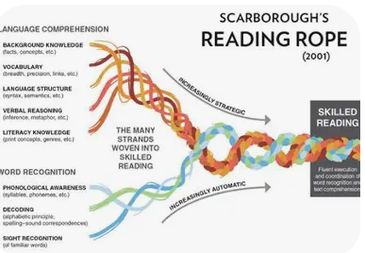
Lexia – The Science of Reading and Sound Walls: Why Sound Walls Matter
An accessible introduction to sound walls, explaining why they organise classroom information around speech sounds and articulatory features rather than traditional written word lists.
Web address: https://www.lexialearning.com/blog/the-science-of-reading-and-sound-walls-why-sound-walls-matter
UFLI Foundations – Sound Wall Resources
Provides extensive free evidence-based literacy resources, including sound-wall materials, mouth and phoneme cards, grapheme cards, systematic phonics materials, decoding and spelling activities. Particularly useful for connecting articulation, phonemes and written representations.
Web address: https://ufli.education.ufl.edu/foundations/

PaTTAN – Literacy Resources and Webinars
Professional development and practical literacy resources for educators, including materials relevant to structured literacy, phonemic awareness and sound walls.
Web address: https://sites.google.com/pattan.net/pattan-literacy
Tools 4 Reading – Sound Walls Webinar
A practical video presentation explaining sound walls and the organisation of speech sounds according to their articulatory characteristics.
Web address: https://www.youtube.com/watch?v=ymw6aCp7m14

Louisiana Department of Education – Literacy Resources
A collection of literacy instruction, intervention and extension resources for educators, including materials relevant to sound-wall and phoneme-based teaching.
Web address: https://doe.louisiana.gov/educators/instructional-support/louisiana-literacy/literacy-instruction-intervention-and-extension-library

Colorado Department of Education READ Act Educator Resources
Evidence-based reading resources, professional development materials and guidance for teachers supporting literacy development.
Web address: https://ed.cde.state.co.us/coloradoliteracy/readacteducatorresources

Reading Rockets
National Reading Panel – Phonemic Awareness and Phonics
Department for Education – The Reading Framework
A comprehensive literacy resource for teachers and families covering phonological and phonemic awareness, the alphabetic principle, phonics, decoding, spelling, fluency and reading comprehension.
Web address: https://www.readingrockets.org/reading-101

Department for Education – The Reading Framework
National Reading Panel – Phonemic Awareness and Phonics
Department for Education – The Reading Framework
Official guidance for schools in England covering the foundations of literacy, systematic synthetic phonics, word reading, fluency and support for children experiencing difficulties learning to read.
Web address: https://www.gov.uk/government/publications/the-reading-framework-teaching-the-foundations-of-literacy
National Reading Panel – Phonemic Awareness and Phonics
National Reading Panel – Phonemic Awareness and Phonics
National Reading Panel – Phonemic Awareness and Phonics
Major evidence review examining the research on effective reading instruction, including phonemic awareness, phonics, fluency, vocabulary and comprehension.
Web address: https://www.nichd.nih.gov/publications/pubs/nrp/findings
Additional Literacy Needs Resources
British Dyslexia Association
UK information for families, schools and professionals about recognising dyslexia, obtaining assessment and supporting children with persistent reading and spelling difficulties.
Web address: https://www.bdadyslexia.org.uk/
PATOSS – Professional Association of Teachers of Students with Specific Learning Difficulties
UK professional organisation providing information about specialist assessment and teaching for dyslexia and other specific learning difficulties.
Web address: https://www.patoss-dyslexia.org/