
Giving a voice to individuals with apraxia of speech
What comorbidities are commonly found with speech apraxia?

Can apraxia of speech be present alone?
yes, Speech apraxia can be present on its own with no other conditions.

What other co-occuring conditions can there be?
With developmental apraxia of speech, people may find speech is a struggle generally, with conditions such as general dyspraxia common. Later acquired apraxia of speech commonly coincides with aphasia, stroke, or neurological diseases.
There may be less attention given to speech apraxia if individuals have conditions such as learning disabilities or communication impairments. We are against this ableism and feel everyone deserves the same access to speech apraxia assessment.
Speech apraxia is not often a diagnosis in isolation: it may be:
- Idiopathic (isolated CAS) with no known cause.
- Syndromic, when part of a broader neurogenetic or neurodevelopmental profile.
- Acquired, following neurological damage or degeneration.
Other Speech conditions commonly found alongside
Unlike aphasia (language difficulty) or dysarthria (muscle weakness affecting speech), apraxia specifically impacts the brain's ability to coordinate the complex movements required for accurate speech production. Picture is from ASHA website
Articulation disorders
Articulation disorders are due to difficulty making the correct movements for speech. It usually affects only a small number of sounds. Common examples in English are where the ‘s’ sound is said like a ‘th’ sound e.g. sing sounds like thing (a lisp) and ‘r’ sounds like ‘w’ e.g. ‘rabbit’ sounds like ‘wabbit’. The child finds it difficult to say the sound on its own and in words. Some children find this impacts on their wellbeing and mental health. Referral to speech and language therapy can help. Some articulation disorders make speech very hard to understand. These children should be referred to speech and language therapy.
Phonological disorders
Phonological disorders are when the child has difficulty using sounds in the correct place in a word or is using the wrong sounds in words. The child can say the sound on its own but has difficulty saying it in words or misses out sounds e.g. the child can say ‘k’ and ‘g’ on their own, but says ‘teep’ instead of ‘keep’ or ‘pid’ instead of ‘pig’. These can make the child very difficult to understand to people outside their family and sometimes to close family members. These children should be referred to speech and language therapy.
Speech Sound Disorders: Articulation and Phonology
Dysarthria
Dysarthria is a condition characterized by impaired articulation of speech due to neurological or muscular dysfunction affecting the muscles used for speaking. Anarthria refers to a more severe form where speech is completely absent. These disorders are typically caused by conditions affecting the central or peripheral nervous system, such as stroke, traumatic brain injury, cerebral palsy, or neurodegenerative diseases (ICD-10-CM R47.1)
Differences in voice quality (e.g., strained, breathy) -
Reduced breath support and short phrases -
Altered resonance (e.g., hypernasality) - Consistent, imprecise articulation - Prosody changes related to rate and volume
newcastle-ebp-dysarthria-assessment-tool-n-dat-dec-2015.pdf
Practical-resource-pack-for-someone-with-dysarthria.pdf
Headway: communication problems after brain injury
Stroke Association: communication tools
Aphasia
Aphasia (also called dysphasia) is a condition that makes it difficult to communicate. It can make it hard to speak, read, write and understand others. It's often caused by a stroke or brain injury. There's no cure, but people usually improve with treatment
Neurodevelopmental and Neurological Conditions
Autism Spectrum Disorder (ASD) – CAS can co-occur in a subset of autistic children; some research suggests higher prevalence.
Global Developmental Delay / Intellectual Disability – CAS may be one component of a broader neurodevelopmental profile.
Communication and people with the most complex needs: What works and why this is essential -report 1488642010_Communication_guide.pdf
Epileptic encephalopathies (e.g. Landau–Kleffner syndrome, West syndrome) – may involve acquired or developmental speech apraxia.
Cerebral palsy (particularly with basal ganglia involvement) – though more often dysarthric, CAS features may also appear.

Acquired Conditions Associated with Acquired apraxia of speech (in older children or adults)
Stroke or Brain Injury
- Left hemisphere stroke, particularly in the inferior frontal gyrus, insula, or motor cortex areas responsible for speech planning.
- Traumatic Brain Injury (TBI) – if speech motor planning areas are affected.
Neurodegenerative Disorders
- Primary Progressive Apraxia of Speech (PPAOS) – a distinct neurodegenerative motor speech disorder, often linked to tauopathies.
- Primary Progressive Aphasia (PPA) – especially the non-fluent/agrammatic variant, where AOS may coexist.
- Corticobasal degeneration – can include apraxia of speech among other motor planning deficits.
Conditions that can co-exist
Aphasia with acquired apraxia of speech
It is rare to have acquired apraxia of speech without some degree of aphasia.
Aphasia, on the other hand, is a language disorder caused by damage to the brain's language centers. It affects the ability to understand, produce, read, or write language. Aphasia can be classified as motor (non-fluent) aphasia, where speech production is primarily affected, or sensory (fluent) aphasia, where comprehension is more impaired
Co-Occurrence and Neural Basis
AOS and aphasia frequently co-occur, particularly after stroke or left hemisphere injury, because the brain regions responsible for speech motor planning and language processing are anatomically adjacent and sometimes overlapping Clinical studies show a double dissociation, meaning a person can have one disorder without the other, but they often appear together, especially in non-fluent aphasia
While aphasia primarily involves language networks, AOS involves motor planning networks for speech. This distinction is important for diagnosis: pure AOS occurs without language deficits, whereas aphasia can exist without motor speech impairment
Clinical Implications
Diagnosis: Differentiating AOS from aphasia is critical because treatment approaches differ. AOS therapy focuses on motor planning and speech coordination, often using repetitive practice, metronome pacing, or visual cues
. Aphasia therapy targets language comprehension and expression, including word retrieval, sentence formation, and reading/writing skills
Treatment Prioritization: When both disorders are present, clinicians often address language deficits first to improve overall communication, while simultaneously incorporating motor speech exercises for AOS
Assessment: Speech-language pathologists use specific tests to distinguish between AOS and aphasia, examining features like sequential motion rates, speech sound errors, and comprehension abilities
Acquired Apraxia of Speech: Diagnosis and Treatment Tactus Therapy
Auditory Processing disorder (APD)

Research suggests there may be an overlap between Auditory Processing Disorder (APD) and Childhood Apraxia of Speech (CAS), as both can involve difficulties processing, perceiving and producing speech; however, they are distinct conditions, and a comprehensive assessment is important to identify whether one or both disorders are present.
What is Auditory Processing Disorder?
Central Auditory Processing Disorder
Auditory Processing Disorder Self-Screening
Online APD Screening
This free screening tool may help identify possible signs of Auditory Processing Disorder. It is not a diagnostic assessment.
If you suspect APD, arrange a comprehensive assessment with an audiologist. Management often involves a combination of audiology input, speech and language therapy, and, where appropriate, auditory training programmes.
Speech Apraxia International discount:
10% off all Forbrain orders
Discount code: 3A9906634
Auditory Processing Disorder Checklist
How to use this checklist
Observe your child over several weeks rather than relying on a single day.
Try to observe them in different environments, including:
- Home
- School
- Busy or noisy public places
Record how often each behaviour occurs (Never, Rarely, Sometimes, Often).
Tick each statement that applies, even if it only occurs occasionally.
Listening and Understanding
- Difficulty identifying where sounds are coming from
- Difficulty hearing when several people are talking
- Easily distracted by background noise
- Frequently misunderstands spoken information
- Often asks for repetition ("What?" or "Pardon?")
- Difficulty following multi-step spoken instructions
- Difficulty joining conversations or classroom discussions
- Reduced understanding of age-appropriate vocabulary
- Difficulty understanding or remembering information that has been read
- Difficulty recalling the order of events in stories or routines
- Misunderstands meaning conveyed through tone of voice or intonation
- Difficulty understanding humour, sarcasm, idioms or other non-literal language
Speaking and Communication
- Slow to respond to spoken information
- Difficulty answering verbal questions
- Word-finding difficulties
- Relies heavily on gestures or facial expressions
- Frequently mispronounces words, particularly longer words
- Difficulties using grammar correctly
- Errors in word order
- Uses short, simple sentences rather than more complex language
- Gives inappropriate responses or fails to respond during conversation
Phonological Awareness
- Confuses words with similar sounds
- Difficulty recognising rhyming words
- Difficulty identifying individual speech sounds
- Difficulty identifying first or last sounds in words
- Difficulty blending sounds together
- Difficulty breaking words into individual sounds
- Frequent spelling errors
- Difficulty sounding out unfamiliar words when reading
Attention, Memory and Learning
- Difficulty maintaining attention to spoken information
- Appears to daydream or "switch off"
- Difficulty following conversations
- Difficulty remembering daily routines
- Poor recall of verbal information
- Delayed language development
- Speech sound or phonological difficulties
- Poor spelling
- Poor reading and reading comprehension
- Difficulty learning songs or nursery rhymes
- Poor note-taking skills
- Frequently forgets homework or verbal instructions
- Requires extra time to complete schoolwork
Scoring
Record the number of items that apply in each section:
SectionScoreListening and Understanding___ /12Speaking and Communication___ /9Phonological Awareness___ /8Attention, Memory and Learning___ /13
Interpreting the Checklist
This checklist is not a diagnostic tool.
If approximately half or more of the items are present across several sections, consider seeking a comprehensive assessment by an audiologist experienced in Auditory Processing Disorder.
Following assessment, recommendations may include:
- Audiological management
- Speech and language therapy
- Classroom accommodations
- Listening strategies
- Auditory training programmes where appropriate
ASHA Resources
- ASHA Blog: Dig Deeper if Treating a Child With Suspected APD
- ASHA Blog: Does Auditory Processing Disorder Meet the Criteria for a Legitimate Clinical Entity?
- ASHA Leader: Don’t Wait to Diagnose Auditory Processing Disorder
- ASHA Position Statement: (Central) Auditory Processing Disorders—The Role of the Audiologist
- Central Auditory Processing and the Common Core
- Coding for Reimbursement Frequently Asked Questions: Audiology—What code/s should I use for auditory processing (AP) evaluation and treatment?
- Coding for Reimbursement Frequently Asked Questions: Speech-Language Pathology—What code/s should I use for auditory processing (AP) evaluation and treatment?
- Focusing Care on Individuals and Their Care Partners
- Hearing-Related Topics: Terminology Guidance
- ICD-10-CM Coding FAQs for Audiologists and SLPs: What code should an audiologist use for CAPD?
- ICD-10-CM Coding FAQs for Audiologists and SLPs: What ICD-10-CM code should I use for auditory processing (AP)?
- Infection Control Resources for Audiologists and Speech-Language Pathologists
- Interprofessional Education/Interprofessional Practice (IPE/IPP)
- Tips for the Differential Diagnosis of Central Auditory Processing Disorder (CAPD) [ASHA Case Study Video; Ferre, 2016]
- Understanding the Differences Between Auditory Processing, Speech and Language Disorders, and Reading Disorders [PDF]
Autism Spectrum Disorder and childhood apraxia of speech
Corticobasal Degeneration /Progressive Supranuclear Palsy
Autism and Childhood Apraxia of Speech (CAS) can occur together. Some autistic children are minimally verbal or non-speaking because of language, social communication or sensory differences, while others may also have a motor speech disorder such as CAS. Distinguishing between these presentations is essential, as intervention approaches may differ significantly.
This page brings together useful information, research and support for parents, professionals and researchers.
Parent Experiences
Lottie Berry' shares her family's journey as the mother of an autistic, non-speaking son with suspected Childhood Apraxia of Speech (CAS).
Childhood Apraxia of Speech and Minimally Verbal Autistic Children
Presentation by Speech and Language Therapist Ruth Jones.
Speech and Language Development
Communication Development Center
Speech and language development in autism.
https://communicationdevelopmentcenter.com/
Video Resource-Fantastic Short Film About Autism
https://youtu.be/2aQqo1HaJWI?si=PbNFO6Et139ek0H1
Neurodiversity-Affirming Practice
- https://onlinelibrary.wiley.com/doi/10.1111/dmcn.15214 (Neurodivergence-informed Therapy)
- https://scholarworks.wmich.edu/ojot/vol10/iss4/6/ (Neurodiversity-Affirming Practices are a Moral Imperative for Occupational Therapy)
- https://www.bps.org.uk/psychologist/neurodiversity-affirmative-education-why-and-how (Neurodiversity-Affirmative Education: Why and How?)
Autism Interventions
Communication and Healthcare
- https://pubmed.ncbi.nlm.nih.gov/37449320/ (Autistic SPACE Framework)
5 Good Communication Standards RCSLT
www.rcslt.org/wp-content/uploads/media/Project/RCSLT/five-good-communication-standards.pdf
- https://www.rcslt.org/speech-and-language-therapy/clinical-information/autism/
- https://www.bild.org.uk/
- https://nationalautistictaskforce.org.uk/
Behaviour and Emotional Regulation
- https://www.nice.org.uk/guidance/ng11
- https://www.nice.org.uk/guidance/ng225
- https://www.challengingbehaviour.org.uk/
- https://www.gov.uk/government/publications
- https://journals.sagepub.com/doi/10.1177/2156869320967399
Neurodevelopment and Diagnosis
Autistic Masking
- https://www.liebertpub.com/doi/10.1089/aut.2020.0083
- https://www.sciencedirect.com/science/article/pii/S0272735821000920
- https://www.liebertpub.com/doi/10.1089/aut.2020.0071
- https://www.thirdspace.scot/nait/
Transition to Adulthood
Co-production
- https://journals.sagepub.com/
- https://www.autistica.org.uk/
- https://aaspire.org/
- https://www.skillsforhealth.org.uk/
- https://www.rcslt.org/speech-and-language-therapy/clinical-information/autism/
ASHA Autism Resources
https://www.asha.org/practice-portal/clinical-topics/autism/
Resources for Families
Early Years
- https://autismnavigator.com/
- https://firstwordsproject.com/
- https://www.cdc.gov/ncbddd/actearly/
- https://autisminternetmodules.org/
Adults
General Autism Resources
- https://www.autismparentingmagazine.com/
- https://autisticadvocacy.org/
- https://www.autismspeaks.org/
- https://autismnow.org/
- https://iancommunity.org/
- https://nationalautismassociation.org/
- https://www.asha.org/njc/
- https://autismpdc.fpg.unc.edu/
- https://iacc.hhs.gov/
- https://www.easterseals.com/
Education
Understanding Autism
https://neuroinclusiveeducation.com/understanding-autism/
Autism and Childhood Apraxia of Speech can occur together. Every autistic child or adult with persistent speech difficulties should receive a comprehensive assessment that considers motor speech, language, hearing, sensory processing and overall communication, ensuring intervention is tailored to their individual profile.
Corticobasal Degeneration /Progressive Supranuclear Palsy
Corticobasal Degeneration /Progressive Supranuclear Palsy
Corticobasal Degeneration /Progressive Supranuclear Palsy
Corticobasal degeneration and progressive supranuclear palsy are most commonly responsible for primary progressive apraxia of speech. nature.com/articles/s41467-021-23687-8
- PSPA (PSP Association UK)
Information, support, local groups and practical advice for people living with PSP and corticobasal degeneration.
https://pspassociation.org.uk - CurePSP
International charity providing education, research updates and support for PSP, corticobasal degeneration and related disorders.
https://www.psp.org - NHS – Progressive Supranuclear Palsy
Overview of symptoms, diagnosis and treatment. Progressive supranuclear palsy - NHS
Do you want to help research PSP? If so you can join this register. Our work in congenital conditions and rare diseases - NDRS
Developmental Dyspraxia
Corticobasal Degeneration /Progressive Supranuclear Palsy
Developmental language disorder
Developmental Dyspraxia (global apraxia). Developmental coordination disorder or dyspraxia refers to an overall motor incoordination which is commonly found alongside childhood apraxia of speech.
Developmental language disorder
Corticobasal Degeneration /Progressive Supranuclear Palsy
Developmental language disorder
People with CAS show elevated levels of antigliadin IgA antibodies and glutamate, along with reduced levels of GABA, unlike those with DLD.
Dysfluency
Fredreich's Ataxia
Dysfluency

For individuals with apraxia of speech, periods of progress can be interrupted by sudden dysfluency, pauses, repetitions, or stuttering-like moments. Apraxia of speech and dysfluency are different conditions but can sometimes co-occur.
Literature review of what are the attitudes toward people who clutter, and can negative attitudes towards cluttering be changed? - to read please email info@speechapraxia.co.uk
Epilepsy
Fredreich's Ataxia
Dysfluency
Epilepsy, autism and apraxia of speech can sometimes co-occur due to genetic influence.
Fredreich's Ataxia
Fredreich's Ataxia
While dysarthria (slurred speech) is common in Friedreich’s ataxia, some individuals may also show signs of apraxia of speech.
Stroke/neurological injury/disease
Stroke/neurological injury/disease
You may acquire both apraxia of speech and ataxic dysarthria, particularly after complex neurological events like a cerebellar stroke, multi-focal brain injuries, or neurodegenerative diseases (e.g., Multiple System Atrophy or certain forms of progressive ataxia). In these cases, you may experience both impaired motor speech planning (speech apraxia) and motor execution/coordination difficulties (ataxia).
Genetic, metabolic, or mitochondrial disorders
Cohen syndrome
49,XXXXY and Cornelia de Lange Syndrome
49,XXXXY and Cornelia de Lange Syndrome
In Cohen syndrome severe speech delay is observed in most children over 5 years, highlighting the need to screen for speech apraxia early.
49,XXXXY and Cornelia de Lange Syndrome
49,XXXXY and Cornelia de Lange Syndrome
49,XXXXY and Cornelia de Lange Syndrome
49,XXXXY and Cornelia de Lange syndrome (CdLS). Both conditions affect neurodevelopment, facial features, and motor skills. 49,XXXXY is associated with childhood apraxia of speech.
Creatine Deficiency Syndromes
49,XXXXY and Cornelia de Lange Syndrome
Creatine Deficiency Syndromes
Creatine transporter deficiency can cause speech apraxia, not just language delay. Affected children may understand
more than they can say, due to motor planning difficulties. Motor-based speech therapy is key.
L-Arginine:Glycine Amidinotransferase (AGAT) Deficiency
Guanidinoacetate Methyltransferase (GAMT) Deficiency
Creatine Transporter Deficiency (CTD)
#creatinedeficiency
Association for Creatine Deficiencies - Advancing Creatine Disorder Research
Down Syndrome
Creatine Deficiency Syndromes
Many individuals with Down syndrome experience difficulties with speech intelligibility Recent parent-reported data shows that many people with down syndrome display hallmark features of apraxia, such as inconsistent speech errors and difficulty sequencing sounds.
Ectodermal dysplasia
Ectodermal dysplasias are a group of rare inherited conditions affecting structures such as teeth, hair, nails, and sometimes the ears and nerves. While speech apraxia is not a core feature, certain aspects of ectodermal dysplasia may increase the risk of motor speech difficulties. Oral differences, such as missing or malformed teeth and changes in palate shape, can make it harder for children to master precise speech movements. Hearing difficulties linked to inner ear development, may reduce the auditory feedback needed for speech learning. In rare cases, neurological involvement may affect the nerves or brain regions that coordinate speech planning. Repeated ENT issues and reduced oral-motor practice can further compound these challenges. Together, these factors may contribute to speech apraxia in some individuals.
Fragile X
Homocystinuria
Galactosaemia
Pragmatic difficulties, oral-motor coordination, attention deficits Fragile X Syndrome: Causes, Symptoms, and Treatment of the Most Common Inherited Intellectual Disability • FRAXA Research Foundation - Finding a Cure for Fragile X Syndrome
Galactosaemia
Homocystinuria
Galactosaemia
Galactosemia, a rare inherited metabolic condition in which the body cannot properly break down galactose (sugar in dairy), has a high co-occurrence with speech apraxia
Homocystinuria
Homocystinuria
Hypomelanosis of Ito
Children with homocystinuria, a rare metabolic disorder, can present with developmental delays, intellectual disability, and speech-language difficulties. Motor speech disorders, including childhood apraxia of speech (CAS), may occur due to the impact of homocystinuria on the nervous system and motor control. In such cases, apraxia therapy focuses on improving motor planning for speech, while also considering the broader cognitive, metabolic, and medical needs of the child. (please note photo may not reflect syndrome)
Hypomelanosis of Ito
Hypomelanosis of Ito
Hypomelanosis of Ito is a rare condition characterized by distinctive skin changes, in which areas of the body lack skin color (hypopigmentation). Speech Apraxia-like profiles in some cases (speech motor planning difficulties)
Joint hypermobility syndrome/Ehlers–Danlos syndrome
Individuals with joint hypermobility syndromes, including Ehlers–Danlos syndrome hypermobility type (EDS-HT), often experience a wider neurodevelopmental profile beyond joints and skin and can extend to oral motor control. (Baeza-Velasco, 2021).
Coexisting conditions
Sensory Processing Difficulties
Visual processing disorder /apraxia
Visual processing disorder /apraxia
Emerging evidence suggests a link between sensory processing and speaking.
Björelius, H., Tükel, S., Tsilingaridis, G., Malmenholt, A., & Terband, H. (2025). Sensory profiles in children with speech sound disorders. Folia Phoniatrica et Logopaedica. Advance online publication. https://doi.org/10.1159/000548782
Visual Processing and Speech - Christine Nearchou Patreon- Speech Apraxia Interantional
Visual processing disorder /apraxia
Visual processing disorder /apraxia
Visual processing disorder /apraxia
Visual gaze apraxia
This is the only organisation in the world that focuses on eye glaze dyspraxia
About us - Our goals | For Small Steps ODV Sardinia
Visual processing disorder and learning difficulties
https://youtu.be/dnLpQvODZik?si=0xSRv5q8IzeCDzCF
Visual Cognition Assessment Tool for Children
Other factors
Enabling communication
Sign up to Communication Access
Home - Communication Access UK
Informing and Profiling Augmentative and Alternative Communication (AAC) Knowledge and Skills
Eating and drinking

Speech Apraxia does not usually effect eating, drinking or swallowing. However other co-occuring conditions might.
Support may include:
- adapting food textures,
- pacing strategies,
- oral motor support,
- posture advice,
- environmental changes,
- and exercises targeting coordination and control.
Hearing impairements
Children and adults can have both speech apraxia and hearing loss. Unfortunately, one condition can sometimes mask the other, meaning speech apraxia may go undiagnosed or be mistaken for difficulties caused solely by hearing loss.
Hearing assessment should be a routine part of every speech and language evaluation, and individuals with hearing loss who have persistent speech difficulties should also be assessed for speech apraxia.
Why This Matters
- Hearing checks should be a standard part of every speech and language assessment.
- Speech apraxia can occur alongside hearing loss.
- Hearing loss does not rule out Childhood Apraxia of Speech (CAS) or acquired apraxia of speech.
- Speech apraxia is often overlooked in deaf and hard of hearing individuals.
- Early diagnosis allows appropriate therapy and better long-term communication outcomes.
Assessment
A comprehensive assessment should include:
Audiology
- Full hearing assessment
- Hearing aid review
- Cochlear implant review (where appropriate)
- Functional listening assessment
Speech and Language
- Assessment for Childhood Apraxia of Speech (CAS)
- Assessment for acquired apraxia of speech (where appropriate)
- Speech sound assessment
- Oral motor examination
- Language assessment
- Functional communication assessment
Multidisciplinary Team
Assessment is often most effective when professionals work together, including:
- Speech and Language Therapist
- Audiologist
- Teacher of the Deaf
- ENT specialist
- Cochlear implant team
- Educational professionals
- Parents and carers
Therapy and Intervention
Treatment should always be individualised and may include:
- Motor speech therapy
- Listening and spoken language therapy
- Auditory verbal therapy
- British Sign Language (BSL) or other sign language support
- AAC (Augmentative and Alternative Communication)
- Hearing aid or cochlear implant support
- Home practice programmes
- School support
UK Professional Guidance
The Royal College of Speech and Language Therapists (RCSLT) provides detailed guidance for professionals working with deaf and hard of hearing people.
RCSLT Deafness Overview
Start here:
Professional Guidance
- RCSLT Position Statement on Deafness (PDF)
- RCSLT & BATOD Collaborative Working Guidance
- Appendix 2 – Establishing Roles and Responsibilities (Word)
- RCSLT & NDCS Recommendations for England
- Specialist SLT Person Specification (England)
- Commissioning and Service Model (Cheshire & Merseyside)
- RCSLT Recommendations for Scotland
- Specialist SLT Person Specification (Scotland)
UK Professional Organisations
- Royal College of Speech and Language Therapists (RCSLT)
- British Academy of Audiology (BAA)
- British Society of Audiology (BSA)
- British Association of Teachers of the Deaf (BATOD)
- British Cochlear Implant Group (BCIG)
Deaf Organisations
- National Deaf Children's Society (NDCS)
- RNID
- British Deaf Association (BDA)
- Royal Association for Deaf People (RAD)
- Hearing Link Services
- SignHealth
- Sense
- deafscotland deafscotland - YouTube
- Life and Deaf Life and Deaf UK | Deaf Awareness, Support & Inclusive Living
- Wales Council for Deaf People
Family Support
- Hear Together
- The Elizabeth Foundation
- Cochlear Implanted Children's Support (CICS)
- Microtia UK
- Auditory Verbal UK (AVUK)
- Cued Speech UK
Hearing Technology
UK Reports
RNID Social research reports - RNID
The Hearing Matters reports describe the impact of hearing loss across the UK.
- Hearing Matters Reports (England, Scotland, Wales & Northern Ireland)
National Deaf Children's Society
- Right from the Start Report (PDF) Right-from-the-Start-campaign-report-FINAL.pdf
International Organisations
- Alexander Graham Bell Association
- American Cochlear Implant Alliance
- American Society for Deaf Children
- Hands & Voices
- Hearing First
- Language First
- National Association of the Deaf (USA)
- National Center for Hearing Assessment and Management (NCHAM)
- National Deaf Center on Postsecondary Outcomes
- Supporting Success for Children with Hearing Loss
- Visual Language and Visual Learning Center (VL2)
A diagnosis of hearing loss does not exclude speech apraxia, and a diagnosis of speech apraxia does not exclude hearing loss. Individuals with both conditions benefit from early identification, multidisciplinary assessment, collaborative working, and evidence-based intervention that addresses both their hearing and speech motor needs
Speech to text
- Live Transcribe
https://play.google.com/store/apps/details?id=com.google.audio.hearing.visualization.accessibility.scribe - Otter.ai
https://otter.ai - Microsoft Dictate
https://dictate.ms
Text to speech
- NaturalReader
https://www.naturalreaders.com
Literacy, writing and phonological awareness
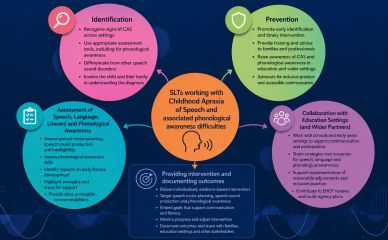
APAR - Assessment of Phonological Awareness and Reading - Home page
List of resources for reading difficulty GaabLab_DyslexiaResourcePacket_December2025.pdf
Charity promoting an education system where all children are taught literacy regardless of their label
Modified reading assessment for children with complex needs
Modified Bridge Table format Feb 2017
Development writing scale for children with complex needs (Sturm et al 2012)
Word identification and decoding | Literacy Instruction for Students with Significant Disabilities
Find printable and interactive curricular resources
101 ideas for literacy +AAC
Phonics +words
101 ideas for literacy +AAC
Free phonics resources
Phase 1 Online Games – Letters and Sounds
Word identification and decoding | Literacy Instruction for Students with Significant Disabilities
Multilinguilism and speech apraxia
This website has speech resources in over 100 languages.
Overview - Multilingual Children's Speech
Languages of the UK
Typical speech processes experienced by adults with bilingualism
4-typical-processes-bilingual-adults.pdf
https://www.youtube.com/playlist?list=PLRXcSAl_dA7arRMrE0qdxLuzGChY1LgY2
Bilingual aphasia test
https://www.bellfoundation.org.uk/resources/eal-assessment-framework/
best-practice-cyp-bilingual-settings.pdf
Sharynne McLeod’s multilingual speech website
SPAA-C (Speech Participation and Activity of Children)
Speech Sounds in the World’s Languages
- Speech Accent Archive – George Mason University